Crop Rotation Is the Backbone of Regenerative Agriculture but Farmers Can’t Deliver It Alone
Regenerative agriculture is frequently reduced, in public discourse, to a handful of visible practices: reduced tillage, cover cropping, livestock integration. Less visible, but arguably more fundamental, is the diversity of the crop rotation itself. A growing body of agronomic and ecological research indicates that widening a rotation from the two or three cereal- and oilseed-dominated sequences typical of much of north-western Europe to eight or more functionally distinct crops is one of the most reliable levers available for soil recovery, nutrient and water management, farm income stability and plant health. The obstacle to adopting it, however, is rarely agronomic. It is structural.
The soil-biological case for diversity
Soil organic matter and the microbial communities that build and maintain it respond directly to the number and identity of plant species passing through a field over time. In a meta-analysis of 122 field studies, McDaniel, Tiemann and Grandy (2014) found that adding even one additional crop species to a monoculture increased total soil carbon by 3.6% and total nitrogen by 5.3%; rotations that also incorporated a cover crop raised these figures to 8.5% and 12.8% respectively. The mechanism is straightforward: different crops contribute qualitatively different above-ground residues and below-ground rhizodeposits, feeding a more diverse and abundant soil microbial and faunal community, which in turn drives aggregate formation and organic matter accrual (McDaniel et al., 2014).
This matters directly for water management. Soil organic matter is estimated by the US Department of Agriculture’s Natural Resources Conservation Service to hold substantially more water per unit weight than mineral soil fractions, improving both infiltration during heavy rainfall and moisture retention through dry spells (USDA NRCS, n.d.). A rotation that consistently rebuilds organic matter is, in effect, building on-farm water storage and drought buffering as a side effect of crop sequencing — a far cheaper intervention than most irrigation infrastructure.
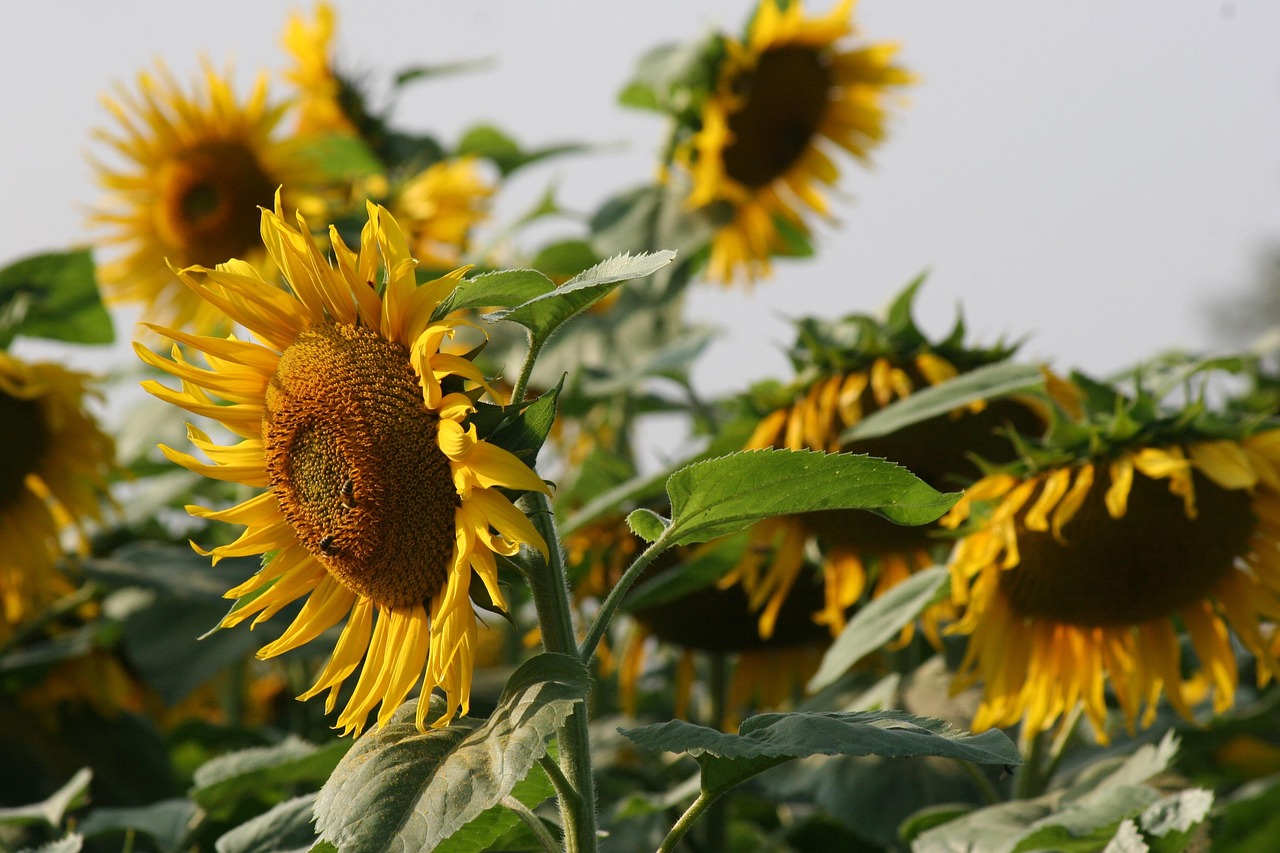
Nutrient cycling benefits follow a similar logic. Legumes such as lentils, beans and vetches fix atmospheric nitrogen, deep-rooted crops such as sunflower and flax scavenge nutrients from lower soil horizons, and the resulting diversity of root architectures improves soil structure and reduces compaction. A recent global meta-analysis by Mudare et al. (2025), drawing on more than 3,600 field observations across 738 trials on six continents, found that diversified rotations increased total yield and farm revenue by around 20% relative to continuous monoculture, alongside a 24% increase in the energy content and a 14% increase in the protein content of harvested produce — evidence that the benefits extend from soil chemistry through to nutritional output.
Income stability as an emergent property, not a bonus
The economic case for diversification is frequently treated as secondary to the agronomic one, but the research treats it as intrinsic. Because different crops respond differently to price shocks, weather anomalies and pest pressure, a portfolio of crops functions for a farm business much as a portfolio of assets functions for an investor: individual failures are absorbed rather than determining the year’s outcome. Mihrete and Mihretu (2025), reviewing the evidence base for crop diversification as a risk management strategy, conclude that diversified systems distribute production and market risk across multiple income streams, reducing the year-on-year income volatility associated with dependence on one or two commodity markets. This is consistent with the wider literature on agricultural risk, in which diversification is treated as a substitute for, or complement to, formal insurance mechanisms that are frequently unavailable or unaffordable for arable farmers.
Plant health and the reduced case for chemical inputs
The plant-health argument rests on well-established disease and pest ecology. Continuous or narrow rotations allow host-specific pathogens and pest populations to build up in the soil and surrounding habitat year on year; breaking the host cycle by rotating away from a susceptible crop interrupts this build-up. Peralta et al. (2018), working with a long-term field experiment, found that soil microbiomes under more diverse rotations carried a measurably greater abundance of disease-suppressive functional genes than those under monoculture, indicating a mechanistic link between rotational diversity and soil-borne disease suppression. At the level of above-ground pests, a synthesis of 209 studies covering 287 pest species found insect pest populations were lower under diversified systems in the majority of comparisons relative to monoculture (Altieri et al., 2024). The proposed mechanism operates on two fronts simultaneously: physical disruption of pest life cycles that depend on a consistent host, and a more balanced, competitive soil and rhizosphere microbial community that leaves less ecological space for pathogens to dominate. Both effects translate, in principle, into a reduced structural need for fungicides, insecticides and nematicides — with the attendant cost, resistance-management and environmental benefits that follow.
The barrier is not agronomic — it is in the logistics
Given this weight of evidence, the persistent gap between the theory of diversification and its practice on the ground deserves scrutiny. Brannan et al. (2023), reviewing the barriers to crop diversification uptake across Europe on behalf of the European Crop Diversification Cluster, found that the obstacles cluster overwhelmingly around market and supply-chain infrastructure rather than farmer knowledge or willingness: a scarcity of adapted varieties, limited processing and storage capacity for “minor” crops, and — critically — the absence of a functioning local market to sell into once the crop is harvested.
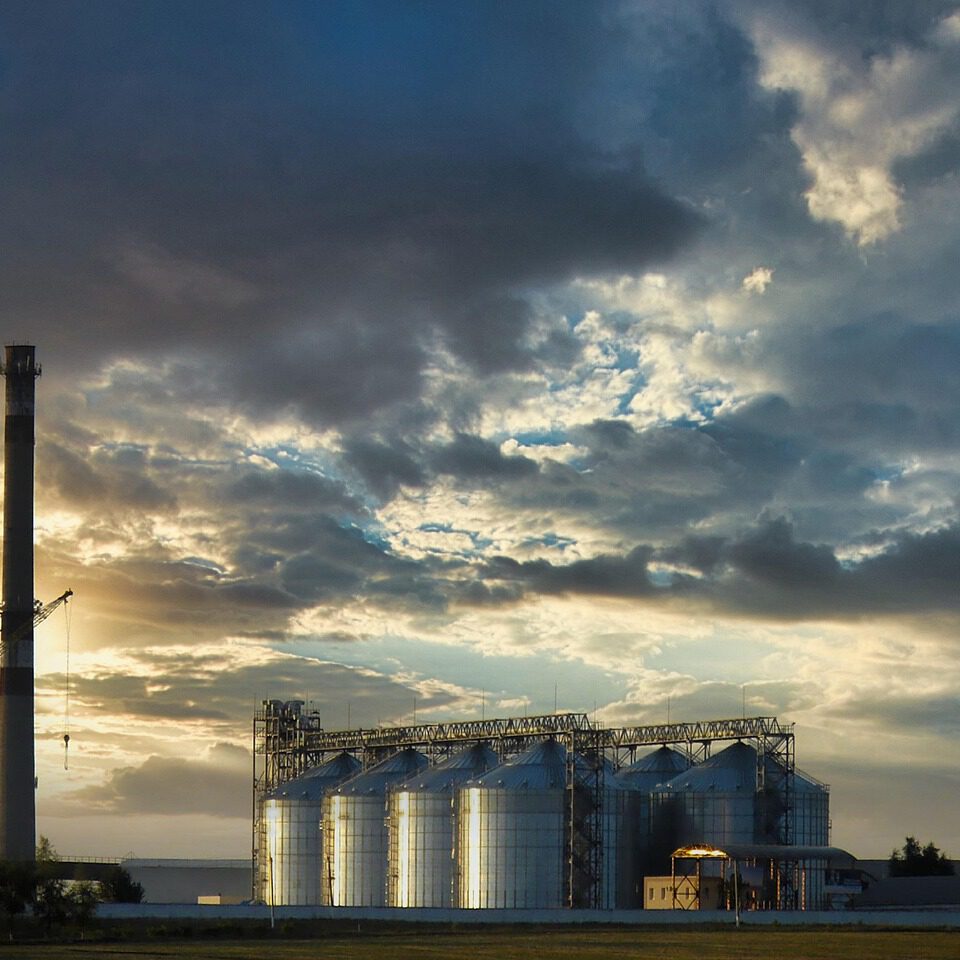
This is the crux of the practical problem, and it is one theoretical treatments of regenerative agriculture tend to underweight. A farmer contemplating a rotation of eight to twelve crops — bringing in pulses such as lentils and beans, fibre and oil crops such as hemp and flax, sunflower, and spring cereal varieties alongside the established winter wheat and oilseed rape — is not merely making an agronomic decision. They are being asked to originate a market, secure storage, and often arrange transport and primary processing for crops that, in many regions, have not been grown commercially for a generation. The local grain merchant or collection warehouse that once handled a broader range of commodities has, in many areas, either closed or consolidated around the two or three crops that dominate current arable rotations, precisely because those are the crops with reliable throughput.
It is neither reasonable nor realistic to expect the average arable farmer to also become a commodity trader, a food processor and a direct-marketing specialist in order to grow a diversified rotation. Farming is already a full-time technical discipline; asking farmers individually to rebuild the market infrastructure that agribusiness consolidation has dismantled over recent decades places the burden of a systemic transition on the actor least equipped, and least resourced, to carry it. The evidence base for diversified rotations is robust. What is missing is not proof of concept at the field level, but investment at the value-chain level: regional collection points, contracted offtake agreements, flexible storage, and processing capacity for pulses, oilseeds and minor cereals. Until agribusiness, cooperatives, millers, maltsters and retailers rebuild that connective tissue, the theoretical case for eight-to-twelve-crop rotations will remain difficult for most farmers to translate into a bankable cropping plan, however compelling the soil science.
What to do
Soil carbon and nitrogen, water infiltration and retention, disease and pest suppression, and farm income stability all improve, broadly in proportion to the number of distinct crop species and functional groups included in a rotation.
The rate-limiting step for regenerative agriculture is not further agronomic proof, but the re-establishment of local demand and logistics for the crops that diversification requires. That is a supply-chain and investment problem, and its resolution lies substantially with the actors upstream and downstream of the farm gate, not with the farmer alone.
Sources
Altieri, M.A., Nicholls, C.I., Dinelli, G. and Negri, L. (2024) ‘Towards an agroecological approach to crop health: reducing pest incidence through synergies between plant diversity and soil microbial ecology’, npj Sustainable Agriculture, 2, article 16. Available at: https://www.nature.com/articles/s44264-024-00016-2
Brannan, T., Bickler, C., Hansson, H., Karley, A., Weih, M. and Manevska-Tasevska, G. (2023) ‘Overcoming barriers to crop diversification uptake in Europe: A mini review’, Frontiers in Sustainable Food Systems, 7, 1107700. Available at: https://doi.org/10.3389/fsufs.2023.1107700
McDaniel, M.D., Tiemann, L.K. and Grandy, A.S. (2014) ‘Does agricultural crop diversity enhance soil microbial biomass and organic matter dynamics? A meta-analysis’, Ecological Applications, 24(3), pp. 560–570. Available at: https://doi.org/10.1890/13-0616.1
Mihrete, T.B. and Mihretu, F.B. (2025) ‘Crop diversification for ensuring sustainable agriculture, risk management and food security’, Global Challenges. Available at: https://doi.org/10.1002/gch2.202400267
Mudare, S., Jing, J., Makowski, D., He, X., Liang, Z., Sims, Z., Wanger, T.C., Tilman, D., Zhang, F. and Cong, W.-F. (2025) ‘Crop rotations synergize yield, nutrition, and revenue: a meta-analysis’, Nature Communications, 16, 9552. Available at: https://doi.org/10.1038/s41467-025-64567-9
Peralta, A.L., Sun, Y., McDaniel, M.D. and Lennon, J.T. (2018) ‘Crop rotational diversity increases disease suppressive capacity of soil microbiomes’, Ecosphere, 9(5), e02235. Available at: https://doi.org/10.1002/ecs2.2235
United States Department of Agriculture, Natural Resources Conservation Service (n.d.) Role of Organic Matter. Available at: https://www.nrcs.usda.gov/conservation-basics/soil/soil-health/role-of-organic-matter